
MYTHBUSTER · 5 MIN READ
Can men just delay and marry younger? The data says no
Men are rarely told they’re on a clock. But their fertility and their partner’s both put real limits on how long they can wait before they start trying to have children.
THE CLAIM
“Men don’t need to rush since they don’t have a biological clock. If they want kids, they can simply settle down later with a younger partner.”
Why it stuck
There’s plenty of talk about the female biological clock, but very little about men’s. Many men want to have children and might even work to get themselves in a position to have them. Others say they want a family but don’t prioritise the things that would lead them there, like being in a committed relationship in time, because nobody tells them it’s urgent.
Unplanned childlessness among men is a growing issue, with more men reaching midlife without the family they hoped for.
What the evidence actually shows
Men have a clock too. Male fertility starts to decline from around 40. And in practice, men also have to plan around their partner’s clock.
Big age gaps are rare. In the UK the average age gap in heterosexual married couples is just 2–3 years, and gaps of over 10 years are very uncommon. Relying on finding a much younger partner isn’t a realistic plan for most men.
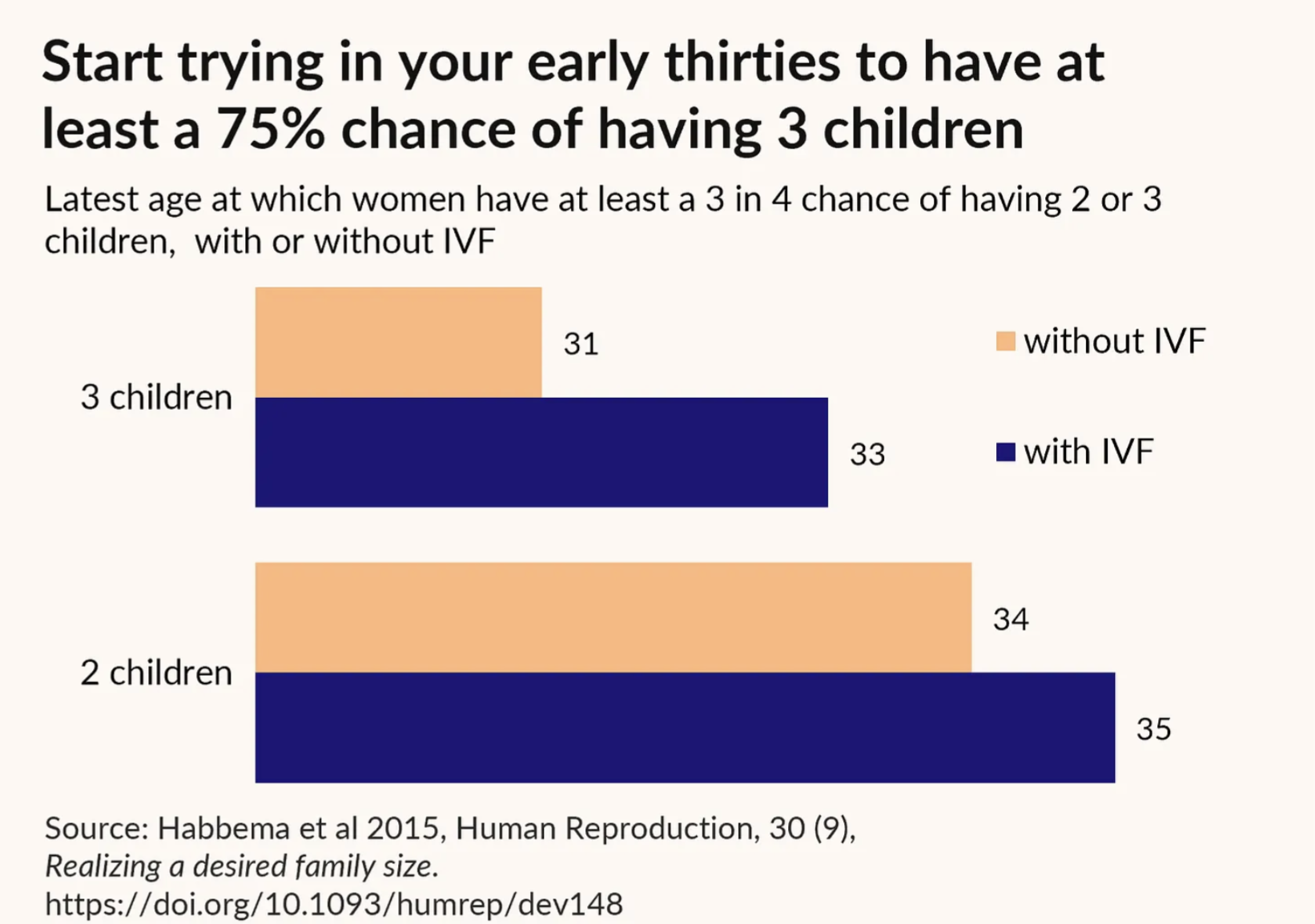
The timeline is tighter than it looks. In the UK, most people think that being together for two or three years is a reasonable wait before having children. To have a 75% chance of having two children naturally, a couple should start trying by the time she’s 34, when he’ll probably be around 36 years old. So the average man should to be with his partner by 33 or 34.
IVF only buys little time. Fertility treatment only adds a year or two for the same chances of the same outcome.
IN SHORT
Men have a biological clock too: male fertility declines from around 40.
In the UK, the average age gap in married couples is only 2–3 years. Gaps of over 10 years are very uncommon.
For a 75% chance of two children, a couple should start trying by the time she’s 34, when he’s likely around 36.
IVF only adds a year or two for the same chances.
2–3 yrs
The average age gap between husbands and wives in the UK. Relationships with gaps of over 10 years are very uncommon.
BOTTOM LINE
Men who want a family have less time than the culture often suggests. Waiting until later and hoping for a much younger partner is a gamble the numbers don’t support. If you want children, it matters for a man to find his life partner in his late 20’s to early 30’s .
Sources: University of Southampton, age differences between partners in the UK · YouGov relationship polling · Love Better, “The single men who dream of fatherhood”